
I can’t remember what I had for lunch yesterday.
But I DO remember the commercials I saw on TV when I was a kid.
Yo Quiero Taco Bell. Gushers. Riiiiii-co-laaaa. Wazzzzaaaap.
You too? Now, tell me your favorite childhood banner ads.
…nothing jumping to mind?
That’s because big-screen memories are built different.
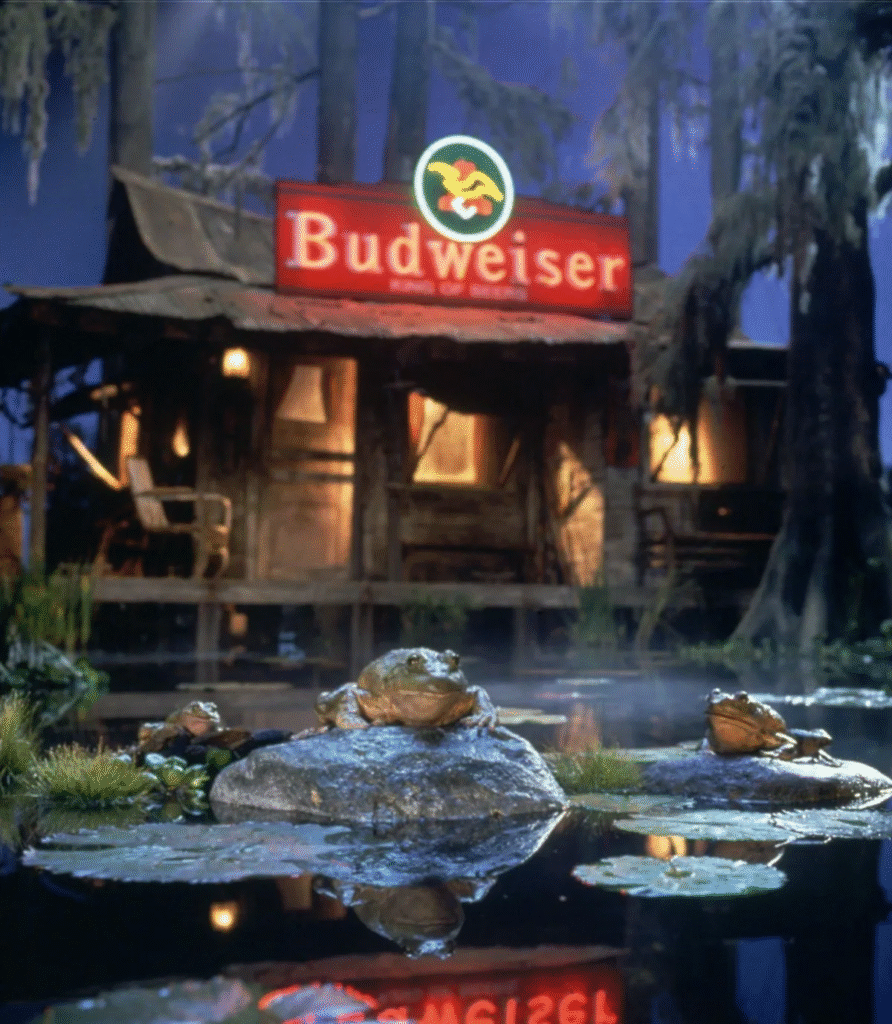
TV creates stories in our minds. It’s why streaming TV ads are making such a comeback, for brands of every size.
But here’s where I see Marketers get tripped up: the story STARTS on TV, but the next move usually happens somewhere else.
Ahead: a short playbook for running CTV campaigns as 1 part of your whole mix.
Keep reading to learn how social, search, and even OOH can play their part flawlessly, so none of your channels are stuck performing solo. 🎷
Let’s get into it.
Lights, Camera, CAC-tion
Attention has never been harder to capture than it is right now. Everyone is scrolling like they owe the scroll man money.
But big screen moments can still stop your customers in their tracks.

That’s #1 out of 3 big reasons why CTV is a core performance channel now, beyond brand marketing. Complete with better targeting, clearer ways of measuring impact against your other channels, and access to premium channels (like Paramount, HBO, and ViacomCBS), even if you aren’t a giant brand.
Reason #2: Costs are rising on search & social because of oversaturation. CTV is still early. Early means less saturation, and more opportunities.
Reason #3: “TV” now means streaming, and streaming means multitasking. 70% of people watch on TV with a phone in their hand.
Your customer is already viewing across multiple touchpoints. Your campaign should be meeting them on each one.
Now, let’s learn how to coordinate each one.
From Multichannel → A Connected Ecosystem
Any great campaign works like a system.
I nabbed some updated stats to prove it:
- Campaigns with 4 media channels yield a 50% higher ROI than a single-channel strategy
- The average consumer needs 56 branded touchpoints before converting.
CTV is the same deal: it works best when TV is just 1 of several coordinated channels, working together to move a customer through the full funnel.
Basically, passing the baton back and forth.
A few handoff examples:
📺 CTV creates the memory + plants awareness on the big screen
📲 Social + search ads capture curiosity on the second screen
🎯 Retargeting turns “I’ve seen this” into “I’m ready to buy”
🚏 DOOH reinforces the story in the real world when it makes sense, like on a digital billboard.
Funnels aren’t linear. Your customer might use any of these as an entry point. The important thing is that they’re all pointing them in the same direction, in different ways.
This kind of coordination is where TV shines.
And where it moves from “random side experiment” to a key part of your mix, driving efficiency for the rest of the team.
One note: Placement quality matters. These handoffs are easier when your 1st impression happens in a premium environment. Because putting your brand on Paramount hits different than when it’s on a random streamer no one’s heard of.
And it hits extra different when all of THAT ^ is on the largest screen in the house.
Got it? Here’s the “pin it to the wall” version:
The CTV Handoff Cheat Sheet
No more letting every channel improvise like it’s amateur jazz night.
To get everyone playing from the same sheet music: give each channel a job in your orchestra. 🎹🎻🎺🥁🎸

The Jobs =
📺 CTV’S JOB = MEMORY + DEMAND
- Creative notes: Storytelling in full-screen. Clarity fast.
- Handoff: Social + search + retargeting
- KPIs: reach, completion, incremental lift signals
👥 SOCIAL = MOMENTUM + PROOF
- Creative notes: Short, specific, human, looks native to the feed.
- Handoff: Click to site, lead, product view
- KPIs: CTR, conversions, engagement quality, on-site behavior
🔎 SEARCH = CAPTURE INTENT
- Creative notes: Plain language, direct benefit, mapped to exact intent
- Handoff: High-intent pages for different conversion paths
- KPIs: Branded search volume & trends, CVR on intent terms
🎯 RETARGETING = FOLLOW-THROUGH FROM INTEREST → ACTION
- Creative notes: Time-saving, frictionless, helpful “here’s the next step.”
- Handoff: Purchases, leads, deeper content engagement
- KPIs: Assisted conversions, incremental lift
🚏 DOOH (DIGITAL OUT OF HOME) = IRL REINFORCEMENT
- Creative notes: Simple, repeated, recognizable, contextual, localized
- Handoff: Branded search, direct visit, or response to the next paid touch (social or retargeting)
- KPIs: Proxies for reach, like geo lift studies and social listening
🤳 INFLUENCER = VALIDATION + REPETITION
- Creative notes: POV, not salesy, demos, creator-led
- Handoff: Product page clicks, sign-ups, “learn more,” or retargeting pool entry (video view, site visit)
- KPIs: Saves, clicks, follows, downstream actions like affiliate conversions
The point of giving each channel a job is to stop asking 1 channel to do everything.
That’s how you get harmony instead of burnout.
🎵 1 quick note: this connected ecosystem only works if you can target the right households & get trustworthy results with hard receipts. This is where third-party data and measurement come in – basically, getting a separate service to check your work, like AdRoll’s partnership with Experian for audience targeting and Innovid for independent CTV measurement.
The Small-Team-Sanity Version
You have 9 hours of meetings, 0 extra brain cells, and your Marketing “team” is 2 people: you, and ChatGPT.
If that sounds familiar, here are 5 steps to run TV effectively:
- Figure out what you want people to do after seeing you on TV. Google you, search a specific product, app installs. Choose 1.
- Pick 1 audience based on real household data. Experian’s data is a good source here.
- Pick the “catcher channel.” Social media, branded search, etc. This is where you’ll drive them to your goal in #1.
- Put a guardrail on repetition. AdRoll suggests aiming for less than 10 impressions/ household per month, and using short (15-second) ads to be less intrusive.
- Use third-party measurement for results. So you don’t have to grade your own homework. InnovidXP, integrated into the AdRoll platform, is one example.
That’s how you keep “awareness” from turning into “uh, why is this brand following me into the bathroom.”
Also helpful: looking at managed services. Especially if you’re new to CTV. AdRoll’s connected ecosystem can guide your campaign across all these channels + measure ROI. And you can manage them all in 1 place, so no channel sits in a silo.
If you remember 1 thing about streaming TV ads/CTV, make it this:
CTV creates the memory. Your other channels should turn that memory into action.
That’s why AdRoll’s approach is built as a whole connected ecosystem: CTV drives awareness and demand, and the ability to amplify across the rest of your mix, all in the same platform. Plus, Innovid handling third-party measurement and Experian audiences helping you reach the right households, so you have strategies & results you trust.
That’s how you run a TV plan that doesn’t depend on luck.
See how you can set up a targeted AdRoll campaign in a few clicks, and how it plugs in to the rest of your mix with retargeting, right here.
And if you want to get some solid primers on how to think about TV inside the rest of your mix, these are great reads worth bookmarking for extra credit:
- Mastering CTV Full Funnel Strategy for Optimal Marketing Results
- CTV Targeting: How to Reach the Right Audience
- Why Smart CMOs Are Betting Big on CTV Ads
- The Connected TV Starter Guide for Advertisers
See you on the biggest screen in the house.